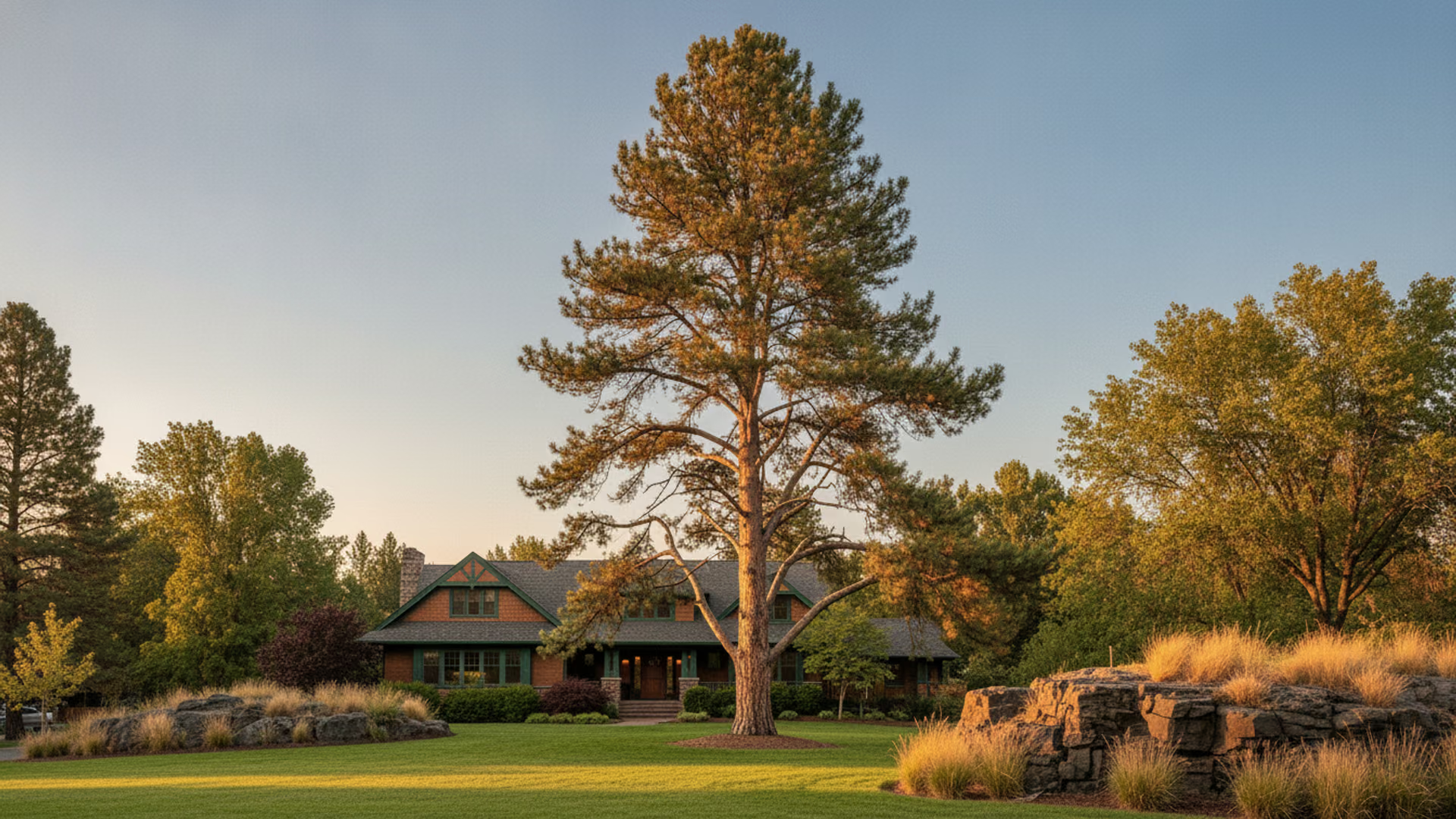
You can hear it on windy nights — branches touching the roof, dragging back and forth across the shingles over the bedroom. Or it's the pine that has quietly swallowed the view you bought the house for, or an overgrown tree too close to the house that feels less like shade and more like a question mark every time a front blows through. That's what tree trimming in Spokane is actually for: the right cuts, in the right season, that get your clearance and your view back and leave the tree healthier and better braced against wind — not butchered. We handle trimming and pruning for homes and businesses across Spokane and roughly 30 miles in every direction, and every job starts with a free written estimate: (509) 215-2692.
Trimming vs. Topping — Why We Won't Top Your Tree
The fastest way to judge a tree crew is to ask them to top a tree. Topping — shearing the crown flat, hat-racking every limb at whatever height the saw reaches — is the one thing a real pruning outfit refuses to do. The cuts land mid-branch, where the tree can't seal them, so the stubs rot. The regrowth is a broom of shoots anchored only in the outer bark, and those shoots grow back fast and snap in the first serious windstorm. Within a few years a topped pine is both uglier and more dangerous than the tree you started with. Proper pruning does the opposite: selective drop-crotch cuts back to a living lateral branch, so the tree keeps its natural shape and its strength. And if a tree is so far gone that topping feels like the only idea left, it's usually a candidate for removal instead — we'll tell you that plainly at the estimate.
Crown Thinning, Raising, and Reduction — In Plain English
Real pruning comes in three flavors, and most Spokane yards need some mix of them:
- Crown thinning removes select branches from inside the canopy so wind passes through the tree instead of hitting it like a sail. Light reaches the lawn again, weight comes off the scaffold branches, and the tree keeps its silhouette.
- Crown raising takes off the low limbs — the ones brushing the roof, hanging over the driveway, or forcing you to duck while you mow.
- Crown reduction shortens a canopy the right way, with cuts back to strong lateral branches. This is what topping pretends to be: real reduction handles height and spread problems and opens view corridors without wrecking the tree.
Every visit also includes deadwood removal, because dead limbs are the ones that come down uninvited — onto the roof, the fence, or whoever is standing under them. Each cut follows arborist-grade pruning standards: back to a lateral or the branch collar, never a stub.
Pruning in Spokane: Timing and Trees
Spokane's trees have their own calendar, and it's worth planning around.
Wind-sail thinning before storm season. This region's signature tree disaster is mature ponderosa pines going over in fall windstorms. The November 2015 storm hit with 71-mph gusts and took down roughly 1,900 trees inside city limits alone, and January 2021 repeated the pattern. Spokane's tall pines carry big canopies on shallow root plates over thin, rocky soil — so crown thinning in late summer and fall, before the November storm window, is the highest-value trim a pine over a house can get.
Norway maples. Spokane's most common street tree — roughly 18% of the city's inventory — and in pre-war neighborhoods like Browne's Addition and South Perry, decades-old maples have grown into roofs, sidewalks, and service lines. They need structural cleanup, deadwooding, and clearance on a regular cycle.
The dormant window, December through February. The best season for tree pruning in Spokane for maples and fruit trees: structure is visible without leaves, disease and pest pressure is low, and cuts heal into spring growth.
Beetle-stress hygiene. Bark beetles are working Spokane's drought-stressed pines — the city is removing more than 200 beetle-killed ponderosas from its parks. Pruning a stressed pine takes discipline: the right timing, clean cuts, no unnecessary summer wounds that invite beetles, and infested wood hauled off-site rather than stacked next to the survivors. If you're not sure whether a struggling pine is stressed or already gone, start with how to tell if a tree is dying.
Clearance Trimming: Roofs, Views, and Power Lines
The bread-and-butter jobs are easy to describe: branches touching the roof that are wearing the shingles and filling the gutters, an overgrown tree crowding the house, a view of the lake or the valley that has slowly disappeared behind a crown. This is view and clearance trimming, and the outcome should be measured clearance and a natural-looking tree — not a wall of green shaved flat against the siding. One honest boundary: limbs growing into the high-voltage lines that run pole to pole are Avista's to clear — call Avista first, because that work is theirs and it's dangerous for anyone else. The service drop to your house and everything below it is our lane, worked with controlled rigging so nothing free-falls onto the roof, the line, or the fence.
Structural Pruning for Young Trees
The metro's newer neighborhoods — Kendall Yards infill and the post-2000 subdivisions in communities like Liberty Lake, where roughly two-thirds of the housing has gone up since 2000 — planted young trees that are now 10 to 25 years old. That's exactly the window when a few small, inexpensive cuts set a tree's structure for life: one dominant leader, well-spaced scaffold branches, and no included-bark forks waiting to split in an ice storm. A structural prune on a young tree costs a fraction of the mature-tree problem it prevents twenty years later.
Serving Spokane and the Surrounding Area
We trim and prune across Spokane, Spokane County, and about 30 miles in every direction — residential and commercial, from century-old street maples to fairway-edge pines. The estimate is free and in writing: walk the trees with us, hear which cuts we'd make and why, and get a clear scope before anyone starts a saw. One distinction worth making — if a limb is already cracked, hanging, or resting on the house, that's not a trim; that's 24/7 storm damage and fallen tree response. For everything that can be planned, call (509) 215-2692 or request your free estimate online.