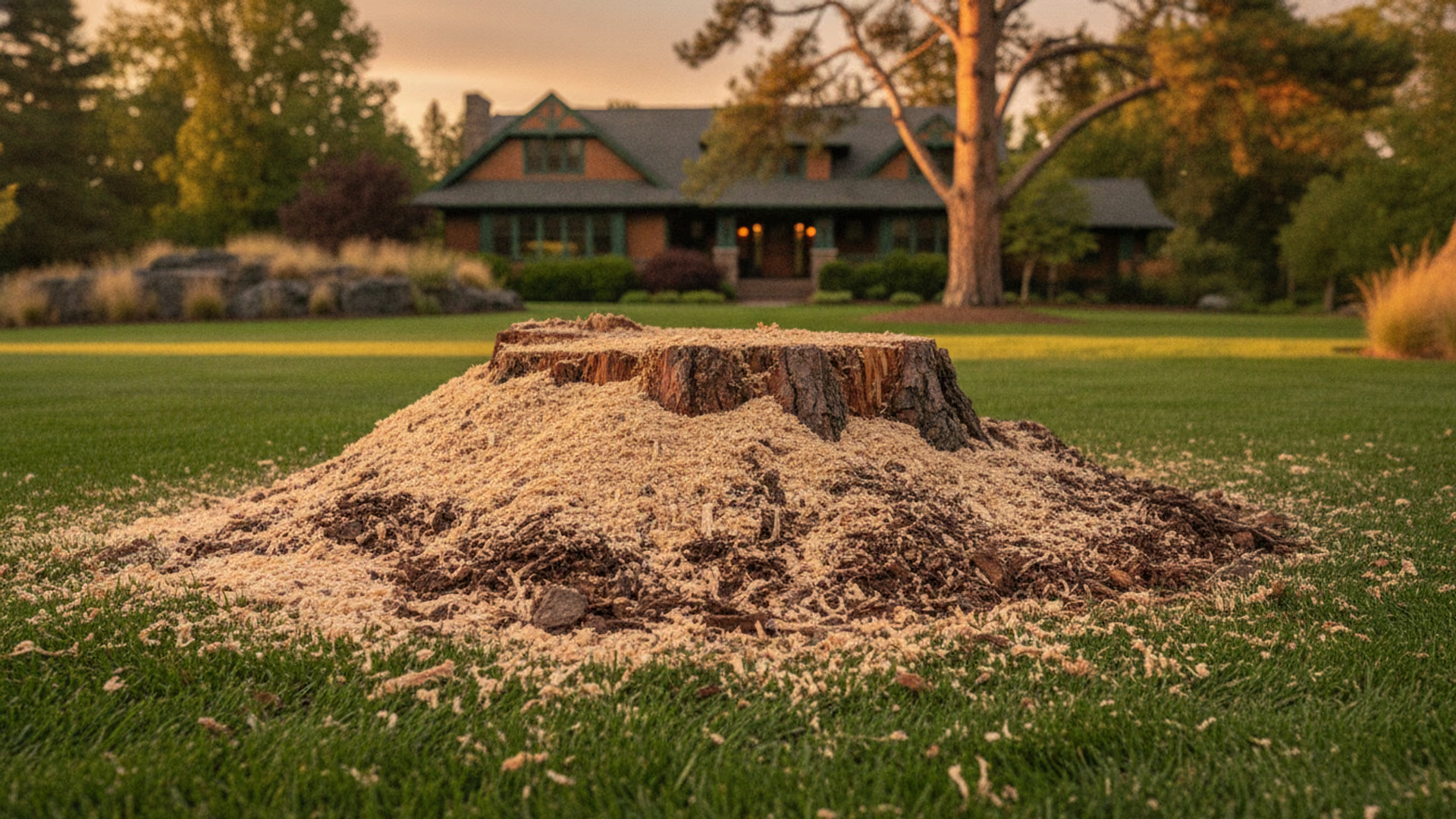
The stump you're finally ready to deal with has usually been there a while. You mow around it every week, you've clipped it with the trimmer enough times to know exactly where it hides, and it's been pushing up shoots since the tree came down — maybe in the November 2015 windstorm that dropped roughly 1,900 trees inside Spokane's city limits, maybe in one of the beetle-kill pine removals that have been working through the region ever since. Stump grinding in Spokane is how that spot goes back to being lawn. We grind single stumps, rows of them, and the leftovers from removals other outfits walked away from — residential and commercial, across Spokane and roughly 30 miles in every direction — and every job starts with a free estimate.
Stump Grinding vs. Stump Removal
They sound like the same service. They're not, and the price gap is large. Grinding uses a carbide-toothed cutting wheel to chew the stump into chips, working 6 to 12 inches below grade — deep enough to backfill the hole, seed grass over it, and mow as if the tree was never there. Most residential stumps take under an hour of machine time, and the lawn around the stump stays intact.
Full stump removal in Spokane means excavating the entire root ball out of the ground. It typically costs two to five times what grinding does and leaves a crater where your lawn used to be. The honest rule: grind for lawns, mower clearance, and looks; dig only when you're building, pouring concrete, or replanting in the exact same spot. We walk through the decision in detail in our stump grinding vs. stump removal guide — and if you're facing a whole lot's worth of stumps ahead of construction, that's really a land clearing conversation, priced by the lot instead of by the stump.
What Happens to the Grindings
A ground stump produces more material than most people expect — the mound of chips often runs two to three times the visible volume of the stump, because the below-grade wood gets ground too and loose chips fluff up. You have three options. Leave the stump grindings as backfill in the hole, and expect the spot to settle for a season or two as the wood decomposes — plan to top it up with soil once or twice. Keep the chips as mulch for beds and paths, where they work fine. Or have them hauled off. One honest agronomy note: decomposing wood ties up nitrogen, so grass seeded straight into grindings comes up thin and yellow. Rake out the bulk, backfill with topsoil, then seed.
Tree Stump Shoots Keep Growing Back? That's Live Roots
Grinding removes the stump. It does not remove the lateral root system — and it was never supposed to, because those roots run well beyond any hole you'd want dug in your yard. With some species, the roots don't get the memo that the tree is gone: poplars, black locust, tree-of-heaven, and the Norway maples that line Spokane's older neighborhoods will send up suckers from live roots for a season or more, sometimes yards from the original stump. So if tree stump shoots keep growing back across your lawn, it doesn't automatically mean the grinder missed — it means the roots still hold stored energy. Mow or cut the suckers every time they appear and the roots exhaust themselves, usually within a couple of seasons. A grind taken properly below grade stops regrowth from the stump itself. And if your stump was a ponderosa or any other conifer — the bulk of what comes down around Spokane — expect no shoots at all. Conifers essentially never resprout.
Old Stumps Invite Carpenter Ants, Termites, and Rot
Leaving a stump to rot isn't a neutral choice, because softening wood is habitat. Around Spokane the most common stump colonizer is the carpenter ant, which nests in moist, decaying wood and forages outward from it — and dampwood and subterranean termites and wood-boring beetles move into soft stumps too. If you're worried about termites in an old stump sitting twenty feet from a foundation, deck, or woodpile, the worry is reasonable; the fix is removing the food source. Beetle-killed pine stumps are exactly the soft, dead wood these insects find first, and root-rot fungi can linger in dead roots as well. Grinding takes the stump out of the equation before it becomes a colony.
Grinding Stumps in Spokane Ground
Spokane sits on ground that fights a grinder. Much of the city rests on gravelly glacial-flood outwash — cobbles and gravel dropped by the Missoula Floods — and on the South Hill and the scabland fringes, thin rocky soil sits directly over Columbia River basalt. Rock is what dulls carbide teeth and slows the cut, and where basalt runs close to the surface, the practical grind depth is whatever the rock allows. An honest estimate says that up front: you'll know before grind day whether your stump can take a full 12-inch grind or whether eight inches is the realistic number, instead of discovering it mid-job as a surprise.
There's no shortage of stumps here to practice honesty on. The 2015 windstorm alone accounted for about 1,900 downed trees inside city limits, and the ongoing beetle die-off has the city removing more than 200 dead ponderosas from its parks — a decade of removals leaves a standing backlog of stumps in Spokane yards. If you're replanting after a grind, work with the soil rather than against it: on fast-draining gravelly ground, backfill with real topsoil, plant the new tree offset a few feet from the old root mass, and water deeply through the first two summers to get it established.
Before We Arrive: Gates, Sprinklers, and 811
A little prep keeps grind day uneventful. Measure your gate — a typical walk-behind grinder needs roughly a 36-inch opening, and knowing the width in advance decides which machine shows up. Flag sprinkler heads and any shallow irrigation lines near the stump; they are the most common casualty of stump work anywhere, and a minute with marker flags protects them. For deep grinds or stumps close to the house, call 811 for a free utility locate before any dig-or-grind work — it's the standard every contractor should follow, and it costs nothing but a couple of days of lead time.
We handle stump grinding and stump removal quotes across Spokane County — Spokane, Spokane Valley, Mead, Deer Park, and everything within roughly 30 miles — for homeowners and commercial properties alike. Still have the whole tree standing over the stump-to-be? Start with tree removal and price the grind as part of the same job. Either way the next step is the same: call (509) 215-2692 — phones are answered 24/7 — or Get a Free Estimate online, and get a written number for exactly what's in your yard.