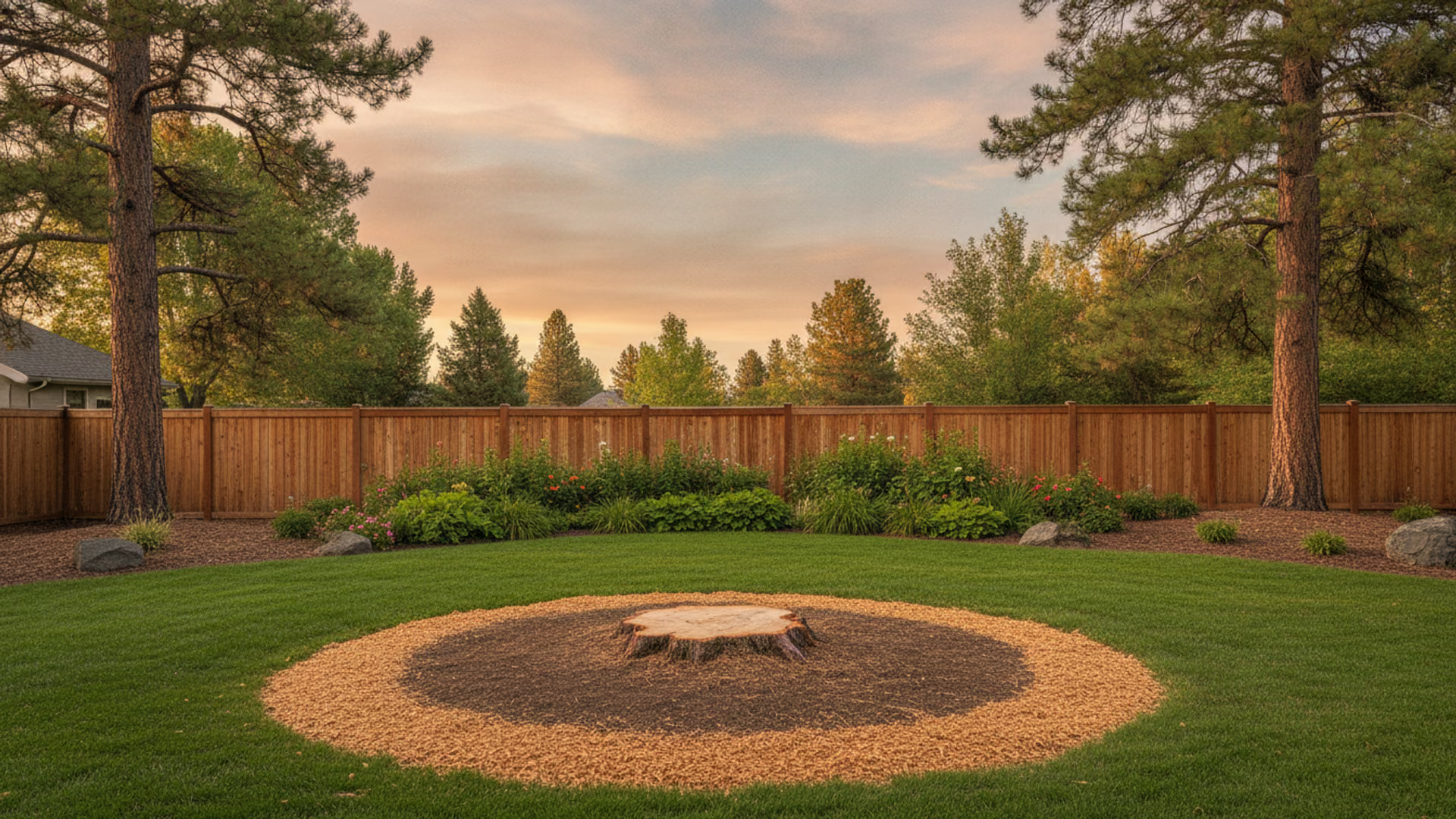
The ponderosa in the backyard leans a little more after every windstorm. The pine that was green in June went red by August, and now the bark is sliding off in sheets. Or last night's wind put a split down the trunk and left half the crown hanging over the roof. That's the point where tree removal in Spokane, WA stops being a someday project and becomes the thing you think about every time the forecast says gusts. We handle exactly that work — hazardous leaners, dead and beetle-killed pines, storm-splintered trunks, and large tree removal tight against structures — residential and commercial, across Spokane and roughly 30 miles of Spokane County, with phones answered 24 hours a day. This page covers what nobody else in the market puts in writing: how a removal actually works, what your tree's symptoms mean, what drives the price, and when a crane shows up.
How a Tree Removal Actually Works
1. Call and describe the tree. Call (509) 215-2692 any hour, or request a free estimate online. Describe what you're seeing — a new lean, a red pine, deadwood dropping — what sits under the tree, and how it behaves in the wind. Photos help us come prepared.
2. On-site hazard assessment. We walk the property and read the tree before anyone touches a saw: the direction and age of the lean, whether the root plate has lifted, decay or conks at the base, deadwood in the crown, and the targets — roof, power lines, fence, shop, play area — plus how equipment gets in.
3. A free written estimate before any work starts. The price covers the removal plan, the rigging, and the cleanup. If the honest answer is that a trim would solve the problem for a fraction of the cost, that's what the estimate says.
4. The removal itself. Open-field felling — notch it, drop it, buck it up — almost never applies on a city lot. A climber or bucket works from the top down, taking the tree apart in measured sections, and everything over anything that matters is roped, rigged, and lowered under control. Nothing free-falls over a roof or fence.
5. Cleanup. Limbs go through the chipper, trunk wood is bucked and hauled, and the lawn is raked before the trailer pulls away. The stump is its own decision — grinding below grade is priced separately, and the full rundown is on the stump grinding page.
What Your Tree Is Telling You
Spokane trees fail in patterns, and the symptom usually names the problem. Find yours:
| What you're seeing | What it usually means | What we do about it | |---|---|---| | Tree leaning toward the house; soil cracked or mounded at the base | The root plate has moved — leaning trees that have started to go over rarely re-anchor | Urgent hazard assessment; usually removal, planned around whatever sits in the fall path | | Pine went red or brown over one summer; bark falling off; sawdust at the base | Beetle-killed or dying ponderosa — standing dead pines get more brittle, more dangerous, and more expensive the longer they stand | Dead tree removal, scheduled sooner rather than later, with crane work if the wood is too brittle to climb | | Trunk split or a big limb tore out in the wind | Storm damage — the remaining wood is loaded unpredictably | Emergency tree service, 24/7, to stabilize and remove what's dangerous | | Mushrooms or shelf conks pushing out at the base | Advanced root or butt decay — the tree can look green up top while hollowing at the ground | Assessment first; decay at the base usually tips the decision toward removal | | Thin crown on one side; big deadwood dropping every wind event | Decline — drought stress, root damage, or infestation working through the tree | A look before winter, while the removal can still be scheduled instead of forced |
That first row is the one that generates the most worry, for good reason: a tree leaning toward house and roofline is the classic Spokane failure, and the follow-through below explains why.
What Tree Removal Costs in Spokane
Tree removal cost in Spokane comes down to four levers. Height — a 100-foot ponderosa is a fundamentally different job than a 25-foot ornamental. Trunk diameter — thicker wood means heavier picks, bigger rigging loads, and more volume to haul. Access — a drop-and-drive front yard is fast; a backyard with no machine access means every piece gets carried out. What's underneath — working over a roof, shop, fence, or service line means slow, controlled rigging or a crane, and a tree in contact with a power line goes to Avista before any tree work starts. Condition matters too: brittle standing-dead pines take more care than live wood of the same size.
With those levers in mind, here's what the Spokane market typically charges — these are market ranges, not our quotes, and every job here gets a free written estimate:
| Tree size | Typical Spokane-market range | |---|---| | Small (under 30 ft) | $150–$500 | | Medium (30–60 ft) | $400–$900 | | Large (60–80 ft) | $800–$1,700 | | Very large, over-structure, or crane work (80 ft+) | $1,500–$3,500+ |
Stump grinding is priced separately from the removal. For the full breakdown of how bids get built — and how to spot one that's too cheap to be insured — see our tree removal cost guide.
When Crane Tree Removal Makes Sense
Crane tree removal applies when a tree is too tall, too dead, or too boxed-in to climb and rig safely. The classic Spokane cases: a 100-foot ponderosa leaning over the house, a beetle-killed pine too brittle to trust with a climber's weight, or a backyard tree with no drop zone in any direction. Instead of lowering sections through the airspace over your roof, each section is cabled to the crane, cut, and lifted up and out — over the house, not past it. It's the safest way to handle large tree removal over structures, and crane time is exactly why over-structure jobs sit at the top of the cost table. The assessment tells us early whether your tree is a crane job, and the written estimate says so plainly.
Why Spokane Trees Come Down
Spokane's signature removal is the tall, shallow-rooted ponderosa. Much of the city sits on thin glacial-outwash soil over Columbia River basalt — on the South Hill and the scabland fringes, 100-foot pines are anchored by root plates far shallower than their height suggests. The record shows what that combination does: the November 17, 2015 windstorm drove 71-mph gusts through the city, toppled roughly 1,900 trees inside Spokane city limits alone, and caused the largest outage in Avista's history; a January 2021 windstorm repeated the pattern.
The other driver is quieter. Drought-stressed pines across the area are feeding an active bark-beetle die-off — Spokane Parks is removing more than 200 beetle-killed ponderosas, including around 50 at Manito Park, and the city has issued advisories urging homeowners to check their own pines. A beetle-hit pine goes red fast and gets brittle faster, which is why dead tree removal in Spokane is best scheduled while the wood still holds a climber — not after two more winters of standing dead. If you're not sure which side of the line your tree is on, start with our guide on how to tell if a tree is dying.
24/7 Storm Damage and Fallen Tree Response
When the wind has already done its work — a trunk snapped at midnight, a pine across the driveway, half a crown resting on the shop roof — the response runs around the clock: phones are answered 24 hours a day, 7 days a week, with 24/7 storm damage and fallen tree response. That's the honest version of same day tree removal in Spokane: not a slogan, just a phone that gets answered at 2 a.m. and a response that doesn't wait for Monday. One boundary worth knowing, because it protects you: if the tree or limb is touching a power line, call Avista first — the utility clears or de-energizes its lines, and then everything from the service drop down is tree work. For the full picture of how storm calls are handled, see the dedicated emergency tree service page.
Tree Removal Across the Spokane Area
Coverage runs from a Spokane base across Spokane County and roughly a 30-mile radius — and each town's trees fail in their own way:
- Spokane Valley — mature ponderosas towering over mid-century lots on droughty Valley gravel that drains almost instantly.
- Liberty Lake — lakefront conifers over resort-era cottages and HOA-tended fairway lots at MeadowWood.
- Cheney — wind-exposed West Plains pines rooted in thin scabland soil over basalt.
- Mead — Fairwood's 60-to-100-foot pine canopies standing directly over single-family roofs.
- Deer Park — timbered acreage parcels carrying roughly 51 inches of snow a year on their limbs.
The Honest Answer, in Writing
Not every worrying tree needs to come down. If a crown reduction or a clearance trim solves the problem, the estimate says trim — a removal gets recommended when the tree's structure is failing, not when it's merely inconvenient. That's the standard for every job, residential or commercial, from a single backyard leaner to a row of dead pines on a commercial lot. When you're ready for a straight answer about the tree you've been watching — or the one the wind just dropped — call (509) 215-2692 any hour, or Get a Free Estimate online, and see the rest of our Spokane tree service work from there. You'll get a walk-around assessment, a written price, and tree removal in Spokane, WA done the controlled way: rigged, lowered, cleaned up, and gone.