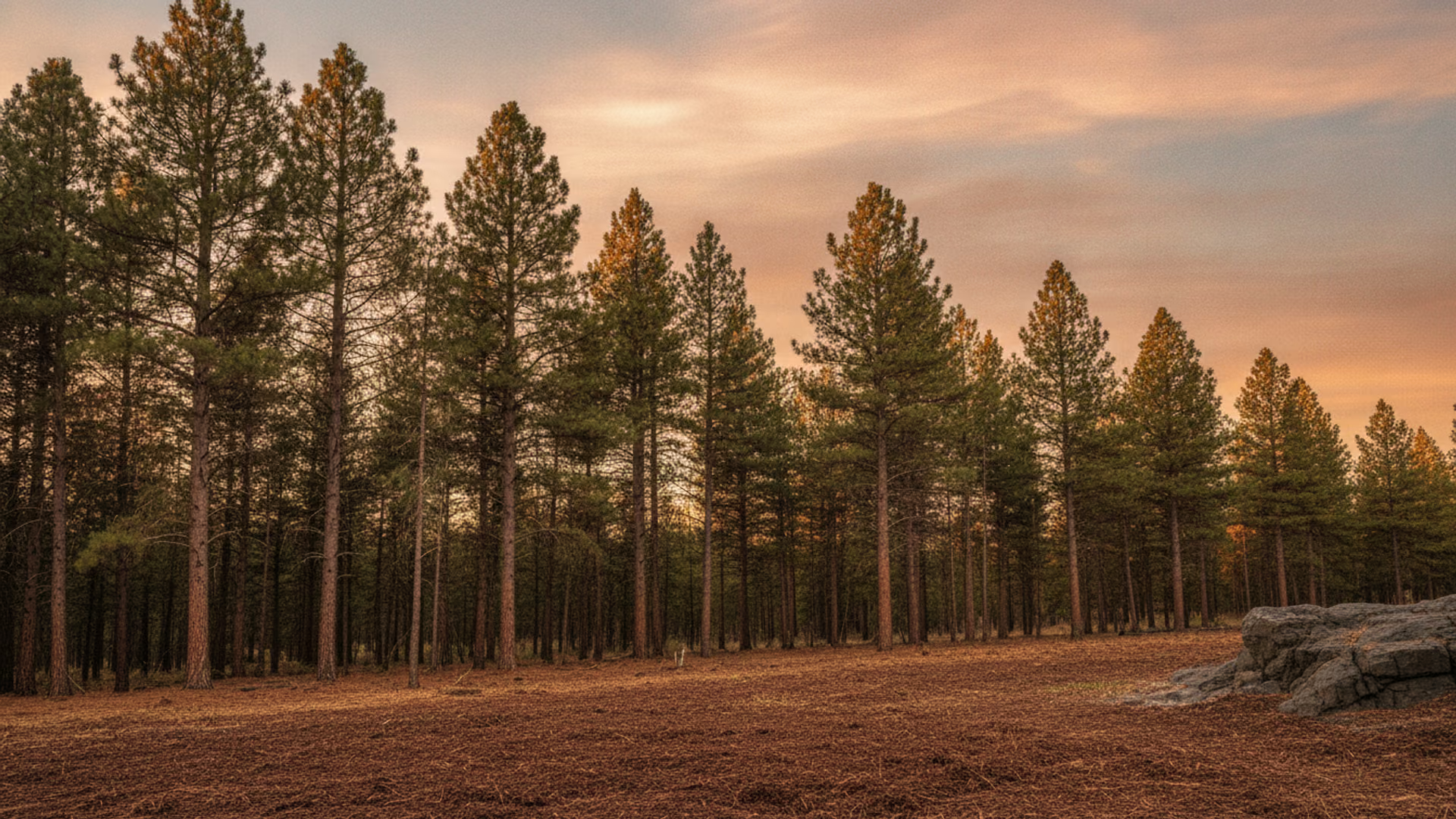
Land clearing in Spokane usually starts one of two ways. Either you own a city lot where the back half has gone to brush — hawthorn and snowberry tangled under volunteer trees until you can't walk it — and you want a yard, a garden, or room for a shop. Or you've bought timbered acreage out toward Deer Park or Cheney and need a driveway corridor and a building site cut out of the pines. Both are the same trade at different scales, and both are what we handle: trees, brush, and stumps — cleared, chipped, ground below grade, and hauled — for residential and commercial properties across Spokane County. Call (509) 215-2692 or Get a Free Estimate and we'll walk the ground with you.
Lot Clearing, Acreage Clearing, or Selective Thinning?
The first real decision isn't who to hire — it's which kind of clearing your property actually needs. Most pages skip this part. We'd rather you know what you're asking for before anyone prices it.
Residential lot clearing
Lot clearing in Spokane, Spokane Valley, and Liberty Lake is city-and-suburb work: overgrown corners, fence lines swallowed by volunteer trees, a wooded lot that needs to become lawn, garden beds, or the footprint for a shop or addition. These jobs are usually quoted per job rather than per acre — a quarter acre of dense tangle can be more work than an acre of open brush.
Acreage clearing
This is the 5-to-20-acre timbered parcel work that's steady around Clayton, Williams Valley, and the rural ground outside Cheney: cutting a driveway corridor, opening a building envelope, reclaiming pasture that pines have been closing in on for decades. If you're clearing trees for construction, this is the lane — the goal is a defined, stump-free zone where the house, well, and septic will go, with the rest of the stand left standing.
Selective thinning
On ponderosa ground, cleared-to-dirt is rarely what owners actually want — a thinned, parked-out stand usually is. Selective thinning takes the crowded, suppressed, and beetle-hit stems — the red-needled pines standing dead in the stand are bark beetle casualties, and they're both a falling hazard and standing fire fuel — and keeps the healthy, well-spaced trees that give the parcel its shade and its value. It's slower, more deliberate work than full clearing, and it's often the smarter money.
Defensible Space and Fire-Mitigation Clearing
This region doesn't need the fire argument made hypothetically. The 2023 Oregon Road Fire burned 10,817 acres and destroyed 126 homes near Elk, north of Mead — wind-driven through pine stands and low fuels. The same season, the Gray Fire hit the West Plains near Medical Lake. And in 2008, the Valley View Fire burned through the Dishman Hills and took 11 homes in Spokane Valley's Ponderosa neighborhood. Every one of those fires moved through exactly the fuels defensible space clearing exists to remove.
The work itself is plain: cut out ladder fuels — the low limbs and the brush growing up under pine crowns that let a ground fire climb into the canopy — open up crown spacing so fire can't run tree to tree, take down the dead and dying beetle-hit pines, and clean the zones closest to the house hardest. If you've seen brush thickening under your pines or dead stems within sight of the roof, that's the condition this service addresses. The spacing standards you'll hear referenced — from Firewise guidance and the Spokane Conservation District — are the same ones assessors and insurers point to, and a good clearing plan works to them.
Brush Clearing and Chipping
Brush clearing and chipping is its own job, not just a footnote to tree work: fence lines gone feral, pasture edges being reclaimed, hawthorn and snowberry thickets choking the ground under a pine stand. The cutting is the easy half. The debris is the real question, because Eastern Washington summers run under DNR and county burn restrictions for much of the fire season — piling and burning slash is often simply not an option, and it's never a good one near structures. So the debris leaves the honest way: chipped on site and hauled, with chips available as ground cover on paths and beds if you want to keep them. On our estimates, the plan for the debris is part of the number, not an afterthought.
Clearing for Construction: What We Do and What Comes Next
Here's the sequencing that saves acreage buyers real confusion. Our lane is the vegetation: we fell and remove the trees — the oversize, near-structure, and hazard stems on a clearing job are just tree removal at scale — clear the brush, grind the stumps below grade with the same equipment and approach as our standalone stump grinding work, and haul the debris off the parcel.
Then comes the handoff, stated plainly: we are the tree crew, not the excavator. Grading the pad, digging the foundation, and cutting the driveway come after us, from your excavation contractor — and a properly cleared, stump-ground, debris-free site is exactly what that contractor wants to start on. Knowing where our scope ends means nobody prices you for work that belongs to someone else.
Where We Clear Land Around Spokane
The demand map here is real and specific. North county, it's the orchard-country and prairie-edge parcels around Green Bluff and Peone Prairie near Mead, where prairie meets pine. Farther north, the 10-to-20-acre timbered parcels around Clayton and Williams Valley outside Deer Park — ground where custom-home building is steady. West, the rural fringe around Cheney toward Fish Lake and Cheney-Plaza Road, where pine stands sit on scabland rock at the edge of Turnbull country. And in town, lot clearing across Spokane, Spokane Valley, and Liberty Lake. Residential and commercial, roughly a 30-mile radius from Spokane.
What Land Clearing Costs
Market ranges, so you can sanity-check any bid: brush and light vegetation typically runs $500 to $2,500 per acre, moderately treed ground $1,500 to $4,000 per acre, and heavily timbered land $3,000 to $6,000 or more per acre. What moves the number is what you'd expect — stem count and size, slope and access, whether stumps are ground, and how much debris has to leave the property. Small residential lots are usually priced per job, not per acre. And the honest mechanic underneath all of it: nobody can price timbered ground from the road. The free on-site walk-through is the estimate. Call (509) 215-2692 or Get a Free Estimate to put it on the calendar.